


Can Dental Implants Fail? Why It Happens and How to Lower the Odds in Encino, CA
The short answer
Here is what failure really means, the early warning signs, and the habits that keep a post healthy year after year.
Yes, though it is uncommon: one long-term review found implant failure to be the exception. To push your odds higher, Dr. Faraz Farahnik, DDS, maps each guided implant on CBCT at Veneers & Co. Dental Group (16260 Ventura Blvd, Suite 730, Encino). Worried about one now? Ring (818) 658-9285, nights included.
Faraz Farahnik, DDSDDS, USC Herman Ostrow School of DentistryPatients travel from across the country and around the world.
Guide
Failure Rates
Can dental implants fail? Yes, although it isn’t common. In a large review of long-term studies, estimated implant survival was high across the included studies, and it stayed high in a stricter re-analysis.
Still, "failure" covers two very different events. Sometimes the post itself loosens and must come out. More often, a part on top, like the crown or its screw, needs a repair while the post stays put. A review of single-tooth implant crowns found technical, biological and cosmetic issues common, though most posts survived. So when you ask whether dental implants can fail, also ask which kind of problem you have, because the fixes differ.
Guide
Main Causes
Most losses trace to healing, infection, or health and habits that affect both. You control several of these.
Early healing
First the jaw must fuse to the post, a step called osseointegration. The FDA says that phase can run several months or more, often with a temporary part on top. If fusion never happens, the post cannot hold a tooth, so we take it out and let the site heal.
Gum infection
Inflamed gums around implants turn up often in studies. One review estimated 43% of patients had peri-implant mucositis, a gum-only inflammation, and 22% had peri-implantitis, where bone also wears away, though each study defined cases a bit differently. Your strongest defense is daily cleaning plus checkups, which the AAP calls key to preventing peri-implant disease.
Smoking
Tobacco tilts the odds the wrong way. In a meta-analysis, smokers lost more implants, had more infections after surgery and showed more bone loss. Per the FDA, it can also slow healing and cut long-term success.
Health conditions
Some illnesses slow recovery. MouthHealthy lists diabetes and leukemia as conditions that can delay healing after implant surgery, along with tobacco. Many people with these conditions still get implants, but we plan with your physician first.
Clenching or grinding
An implant takes your full bite all day. So if you grind or clench, known as bruxism, mention it early, since a night guard can spare the post.
Guide
Warning Signs
Watch the gum, your bite and the way the tooth feels. Phone us if you notice:
- bleeding or puffy gum around the implant, or a bad taste that keeps coming back
- a crown that feels loose, clicks or shifts when you bite
- pain or pressure while chewing
- gum shrinking back from the implant, or metal starting to show
- numbness or tingling in the lip or chin that doesn’t fade after surgery
The FDA lists nerve-related numbness after surgery as a possible complication. Also, keep cleanings on the calendar even when nothing hurts, since the AAP pairs them with home care to head off implant disease.
Guide
Replacing a Failed Implant
Usually, after the site heals. First we check, with a CBCT scan, whether enough bone remains for a new post. Bone loss often follows tooth loss or gum disease, AAOMS notes, and a bone graft can rebuild it.
A second try only makes sense once we know why the first one failed. For example, smoking raised both failure and infection rates in one review. So ask what went wrong and how the new plan addresses it. In some mouths a bridge fits better, and Dr. Farahnik will explain why.
Guide
Lowering the Odds
Planning and daily care do the heavy lifting:
- Plan in 3D. The AAOMR advises cross-sectional imaging at every implant site and names cone beam CT the method of choice. We scan with an in-office CBCT.
- Quit tobacco well before surgery, because it raises failure and infection rates.
- Get health conditions under control with your physician’s help, especially those that slow healing.
- Clean around the implant every day and keep every maintenance visit.
- Shield it at night. A guard spares the post from grinding.
Guide
Age and Implant Odds
Health and habits outweigh birthdays. In that long-term review, patients 65 and over had slightly lower survival in one analysis, yet most of their implants still lasted. See implants for seniors for factors beyond age, and implant lifespan for the long view.
Guide
Insurance and Payment Plans
PPO coverage: all plans accepted.
Financing: Cherry is our first pick. CareCredit is the fallback. Sunbit and in-house plans work too.
You'll receive a written treatment plan and fee after your exam.
Insurance: We accept all PPO insurance plans.
Financing: Cherry · CareCredit · Sunbit · In-house financing
Apply with CherryApply with CareCredit
Financing is subject to credit approval.
Questions
FAQ: Implant Failure
How common is dental implant failure?
Rare. Long-term studies show the vast majority still in place. Your health, habits and upkeep set your own odds.
Can an implant fail years later?
Yes. Late trouble is usually peri-implantitis, which eats bone, or wear on the crown and screw. Checkups catch both early.
Will a failing implant hurt?
Not always. So do not wait for pain. Call if the gum bleeds, a bad taste lingers, or the crown moves.
Can smokers get dental implants?
Many can. Still, tobacco raises failure and infection risk, so quitting before surgery and through healing helps.
What happens after an implant fails?
We remove it and let the area heal. Later, a new post may go in, sometimes after a graft, or a bridge may suit you better.
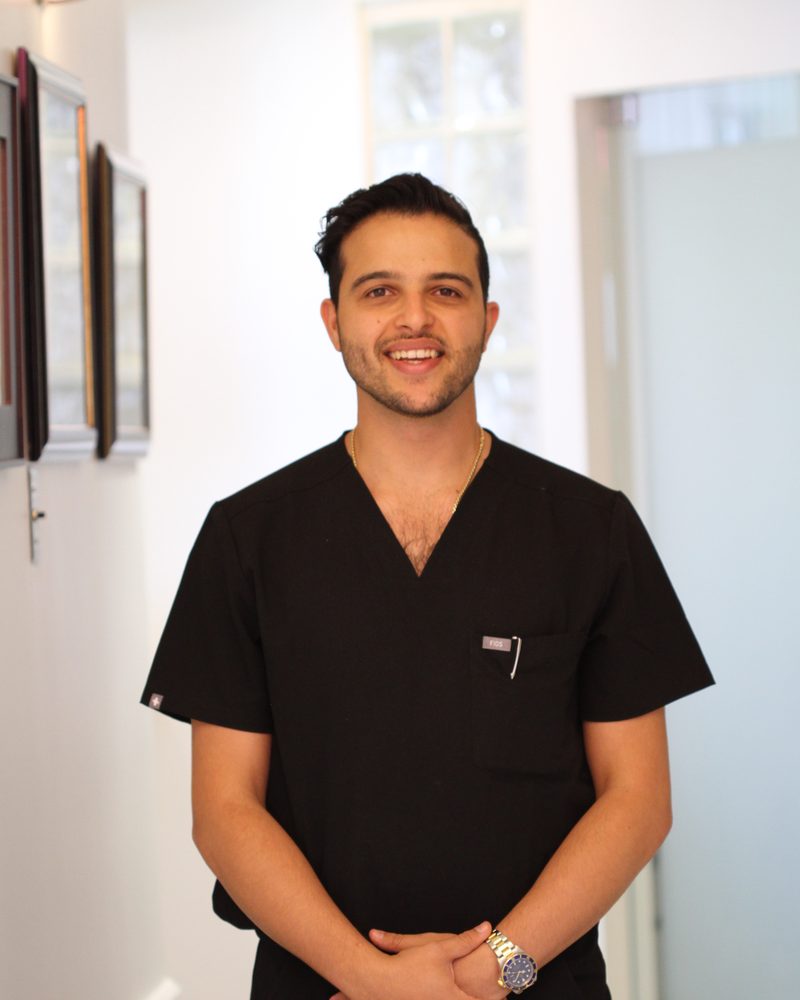
The dentist
About your dentist
Faraz Farahnik, DDS is a general dentist whose practice focuses on cosmetic and restorative dentistry.
- Education
- UCLA, with honors · DDS, USC, 2018
- Practicing
- Practicing dentist since 2018
- Languages
- English · Farsi
Begin
Implant Check-Up
Book a visit. Dr. Farahnik checks the post, the gum and the crown with a scan, then tells you plainly what, if anything, it needs. Implants from other offices are welcome.
Call (818) 658-9285 today, any hour. A final plan follows an in-person exam.