

A quick look that can matter a lot
Oral Cancer Screening in Encino, CA: 5-Minute Check
An oral cancer screening is a short visual and hands-on exam of your lips, tongue, cheeks, palate, throat and neck to find changes early. Dr. Faraz Farahnik, DDS, includes one in every exam at Veneers & Co. Dental Group, 16260 Ventura Blvd, Suite 730, Encino. It takes about five minutes and uses no needles. Spotted a sore that will not heal? Call (818) 658-9285 at any hour.




Open 24/7 · English · Español · فارسی · العربية
Oral Cancer Screening at a glance
The key facts about oral cancer screening at Veneers & Co. Dental Group in Encino, from who treats you to how you can pay.
- Dentist
- Faraz Farahnik, DDS (USC Herman Ostrow School of Dentistry, 2018)
- Experience
- Dr. Farahnik has 8 years in practice, 20 years in the dental field.
- Patients
- Trusted by 2,000+ patients over 8 years and open 24/7.
- Every consultation
- iTero 3D scan and a mock-up of your smile
- Where
- 16260 Ventura Blvd, Suite 730, Encino, all under one roof
- Paying
- All PPO plans accepted; financing through Cherry first, then CareCredit
Small Changes, Early Catch
Changes caught while small are usually simpler to treat than those found late.
Many mouth and throat changes cause no pain at first. A dentist sees the inside of your mouth more often than almost anyone, which is why the screening rides along with routine visits.
Areas We Check
- Lips, inside and out
- Both sides and underside of the tongue
- Floor of the mouth and the palate
- Inner cheeks and gums
- Tonsil area and back of the throat
- Lymph nodes along the jaw and neck
Look, Then Feel
Dr. Farahnik uses a light, a mirror and gauze to hold the tongue, then gently presses along the jaw and neck.
He is looking for color patches, lumps, thick spots or sores and feeling for firm or tender nodes. Nothing is cut or scraped during a routine screen.
Changes Worth Showing Us
- A sore or ulcer lasting longer than two weeks
- White or red patches that do not rub off
- A lump or thickening in the cheek or neck
- Hoarseness, or trouble swallowing that lingers
- Numbness of the tongue or lip without a clear cause
Risk Factors to Mention
Anyone can develop oral cancer, but some habits and exposures raise the odds.
Tobacco in any form, heavy drinking, HPV infection and years of sun on the lips all matter. Tell us honestly at your exam; it changes how closely we watch, never how we treat you.
Your Screening, Step by Step
It fits inside a normal checkup or cleaning visit.
History
A few questions about habits, symptoms and changes you noticed.
Look
A lit, close view of every surface in the mouth.
Feel
Fingertips check the floor of the mouth, jaw and neck.
Record
Notes and intraoral photos are saved for comparison next time.
Plan
If anything looks off, a recheck or referral is arranged.
If We Find Something
Most spots turn out to be harmless, such as a bitten cheek or irritation from a sharp tooth.
Often the first step is a recheck in two weeks once the likely cause is removed. If a change persists, Dr. Farahnik refers you for a biopsy and stays in touch through the result.

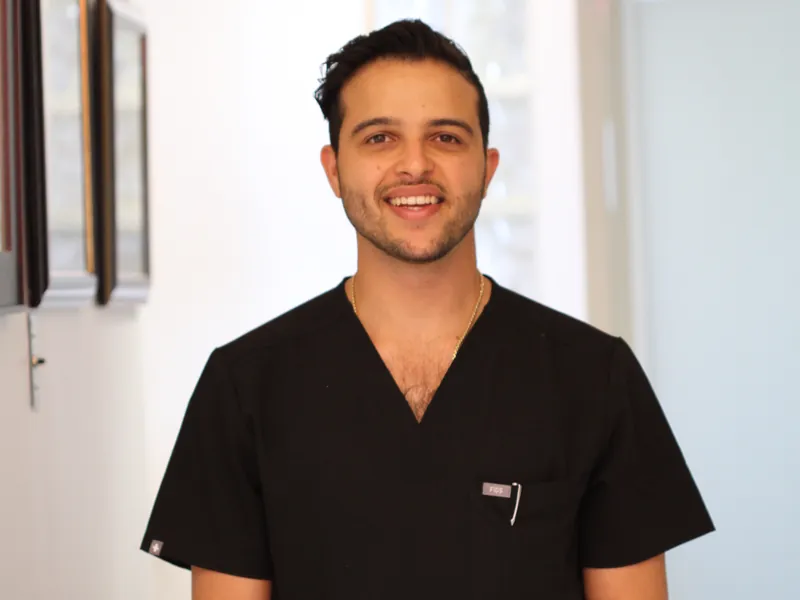
Your dentist
An Extra Set of Eyes
Dr. Farahnik has been in dentistry since 2006 and a practicing dentist since 2018. He photographs anything unusual so it can be compared at your next visit rather than left to memory.
Covered at Checkups
The screening is part of the exam itself, which most PPO plans include. We accept all PPO plans.
Any treatment that follows can be spread with Cherry first or CareCredit second, plus Sunbit or in-house plans.
Apply with CherryApply with CareCredit
Financing is subject to credit approval.
Oral Cancer Screening Questions
How often should I get an oral cancer screening?
We include one at every routine exam, usually every six months. If you use tobacco, drink heavily or had a past lesion, Dr. Farahnik may want to look more often.
Does the screening hurt?
No. It is a visual look with a light and mirror plus gentle pressure along your jaw and neck. There are no needles, and nothing is cut or scraped during a routine check.
Can a dentist diagnose oral cancer?
A dentist can spot changes that need follow-up. A firm diagnosis comes from a biopsy, a small tissue sample examined by a pathologist, which we arrange through a referral when needed.
Is a mouth sore always a sign of cancer?
No. Most sores come from biting, a sharp edge or a canker sore and heal within two weeks. A sore that lasts longer, bleeds easily or feels hard should be checked.
Five minutes in the chair. Peace of mind when you leave.
Oral cancer screening · every exam · Encino