


Are Dental Implants Safe? The Real Risks, Managed in Encino, CA
The short answer
Are dental implants safe? Long-term data says yes for most adults, but it is still surgery. The real risks, who faces more, and what lowers them.
For most healthy adults, yes: implants are a well-studied, predictable way to replace teeth. Risks include infection, slow healing and nerve injury. Dr. Faraz Farahnik, DDS, maps each guided implant on a CBCT scan taken right in our Encino office. Veneers & Co. Dental Group sits at 16260 Ventura Blvd, Suite 730; call (818) 658-9285 anytime.
Faraz Farahnik, DDSDDS, USC Herman Ostrow School of DentistryPatients travel from across the country and around the world.
Guide
Safe for Most Adults
For most people, yes. Pooled long-term studies showed most implants still anchored in bone.
Safe does not mean zero risk. Placing a post in bone is minor surgery, and while it goes smoothly for most people, you should know the downsides before you say yes. Below, we list each one with what keeps it in check.
Guide
The Risks of Dental Implants
Four come up most: infection, poor healing, harm to nearby nerves or sinus, and gum or bone trouble that shows up years later. Among the FDA's listed complications is lasting numbness from a pinched or damaged nerve.
| Risk | What it means | How it is reduced |
|---|---|---|
| Infection after surgery | Postoperative infection at the implant site | Smokers had clearly more infections after surgery in one review |
| Healing problems | The implant doesn’t bond firmly with the bone | Health conditions reviewed first; healing time allowed |
| Nerve injury | Numbness or tingling of the lip, chin or tongue | Cross-sectional imaging of the site before surgery |
| Sinus involvement (upper jaw) | Too little bone below the sinus | A sinus lift builds bone first |
| Peri-implant disease | Swollen gums and shrinking bone near the post | Daily cleaning and regular visits |
| Technical problems | A loose screw or a chipped crown | Maintenance visits and repair |
Guide
Patients Who Need Extra Care before Getting Implants
Two groups: those whose body heals slowly and those short on bone. MouthHealthy points to diabetes and leukemia as illnesses that can delay healing, says some patients with them may not qualify, and adds that tobacco slows recovery too.
Thin bone is often fixable. Grafting rebuilds it, and for upper back teeth a sinus lift makes room for the post. A periodontist here places implants and grafts too. Bring your full medication list so we miss nothing.
Guide
Making Implant Surgery Safer
Mostly through planning before surgery begins, and choosing the right timing for each step.
- 3D imaging. The AAOMR, a radiology group, wants every implant site seen in 3D, ideally by cone beam CT, and our office has one. Because it uses more radiation than an ordinary X-ray, the FDA and ADA advise using it only when it is needed.
- Grafting where bone is thin. A review of sinus floor augmentation found it reliable, with a weighted annual implant loss of 0.43% over follow-up of five years or more.
- Timing the post. A meta-analysis put survival at 97.4% for same-day placement versus 97.5% for waiting, nearly even. The same-day group, though, had slightly deeper gum pockets and a bit more bone loss near the top.
- Time to heal. AAOMS notes it usually takes several months once the implant goes into the jawbone.
Guide
Long-Term Safety
Mostly, if you keep up care. In one long-term review, the large majority of single implants were still in place; minor trouble with screws, gums or appearance was frequent though.
Around 22% of patients in a separate review developed peri-implantitis, an infection that erodes bone near the post. The AAP gives the same advice as for natural teeth: brush well and keep cleanings regular. For lifespan, read how long dental implants last.
Guide
Implants After 60
Birthdays matter less than health, as the dental implants for seniors guide explains.
Guide
Questions to Ask before Implant Surgery
Ask enough to understand the plan and who is doing what:
- Will I have a cone beam CT scan, and what does it show about my bone and nerves?
- Do I need grafting or a sinus lift first?
- Who places the implant, and who makes the crown?
- How will my health conditions and medications be managed around surgery?
- What should I expect while it heals, and who do I call if something feels wrong?
- And what upkeep will the implant need afterward?
- What happens if the implant doesn’t heal as planned?
Clear answers to these questions are a good sign that the plan has been thought through, and they help you compare options with confidence.
Your first step is a conversation.
Guide
Your Written Implant Plan
You'll receive a written treatment plan and fee after your exam.
You'll receive a written treatment plan and fee after your exam.
Insurance: We accept all PPO insurance plans.
Financing: Cherry · CareCredit · Sunbit · In-house financing
Apply with CherryApply with CareCredit
Financing is subject to credit approval.
Questions
Frequently asked questions about implant safety
Can dental implants cause numbness?
It is uncommon, but it can happen. The FDA lists numbness from nerve impingement or damage as a possible complication, which is one reason implant sites are imaged in 3D before surgery.
Are dental implants safe for people with diabetes?
Often, if blood sugar is controlled. Diabetes can slow healing, so we review your health and may check in with your physician first.
Is a cone beam CT scan safe?
It uses more radiation than a routine X-ray, so we take it only when needed. Implant planning is one of those times.
Can my body reject a dental implant?
Gum and bone infection and smoking top the list in studies. We screen for both before surgery and watch for them at every recall.
How do I keep my implant healthy?
Brush and floss around it every day, don't smoke, and keep your cleanings. Grinders should sleep in a custom guard to spare the crown.
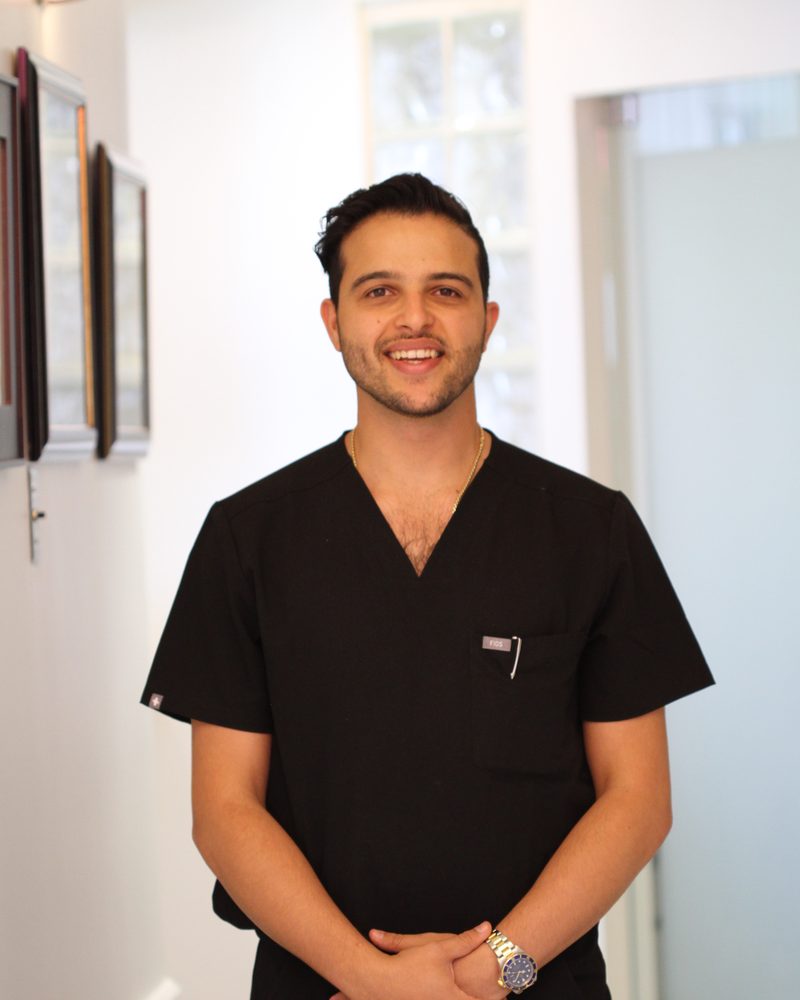
The dentist
About your dentist
Faraz Farahnik, DDS is a general dentist whose practice focuses on cosmetic and restorative dentistry.
- Education
- UCLA, with honors · DDS, USC, 2018
- Practicing
- Practicing dentist since 2018
- Languages
- English · Farsi
Begin
Talk Through Implant Safety
Book a CBCT scan plus an exam in Encino. Dr. Farahnik reviews your health and bone, then maps every stage of a guided implant with you.
Ask about implant safety for your health history at (818) 658-9285; the scan and exam settle the details.
Related pages