


Implants vs Dentures: Fixed, Removable and In Between in Encino, CA
The short answer
Missing many teeth, maybe a full arch? That choice weighs more than a single gap. Here is how plain dentures, snap-on dentures and fixed implant teeth compare day to day.
Dentures come out and need no surgery, while implants anchor teeth in bone, so they feel steadier and help limit bone loss. Before recommending either, Dr. Faraz Farahnik, DDS, measures your bone on CBCT at Veneers & Co. Dental Group (Encino; 16260 Ventura Blvd, Suite 730). Lines stay open every hour at (818) 658-9285.
Faraz Farahnik, DDSDDS, USC Herman Ostrow School of DentistryPatients travel from across the country and around the world.
Comparison
Implants vs Dentures: Fixed or Removable
Whether the teeth are held by the bone or rest in the mouth on their own. A conventional denture is a removable replacement you take out yourself, while implants anchor in the jawbone and can support crowns, bridges or dentures.
The ADA glossary defines removable partials as replacements a wearer can take out, while a fixed prosthesis sits "solidly attached to abutment teeth, roots or implants." In implants vs dentures, that one line, fixed or removable, drives most of the choice, and it explains why wearers describe them so differently.
AAOMS patient guidance gives the reason: implants fuse with bone through osseointegration, so implant teeth stay steady in ways dentures cannot.
Implants vs dentures side by side
| Conventional denture | Implant-supported denture | Fixed full-arch implant bridge | |
|---|---|---|---|
| What it is | Removable teeth on a base | A denture that clips onto implants | Full arch bolted to posts |
| Surgery | None for the denture itself | Yes, to place the implants | Yes, to place the implants |
| Removed by you | Yes | Yes, for cleaning | No; your dental team removes it when needed |
| Effect on jawbone | Denture wearers may lose bone over time | Implants help limit bone loss | Implants help limit bone loss |
| Timeline | Shorter; no implant healing | Months for implants to heal | Months for implants to heal, often with temporary teeth |
| Upkeep | Daily cleaning, refits as the mouth changes | Daily cleaning plus checkups around the implants | Careful cleaning around the bridge plus maintenance visits |
| Reversibility | Can be remade or changed | Implants stay; the denture can be remade | Implants stay; the bridge can be repaired or remade |
| Who it suits | People who want to avoid surgery or lack bone | Those wanting more stability with a removable option | Those wanting teeth that stay in place |
| What shapes the plan | The type of denture and any extractions | Number of implants, attachments and the denture | Number of implants, grafting, imaging and the bridge material |
Comparison
Stability
It comes down to how well teeth stay put while you chew and talk. Posts anchor them, so they do not slide like a base can.
AAOMS notes that implants can be used to stabilize and secure a denture, "making it much more comfortable and functional." The ADA also suggests talking to your dentist about implants if you wear dentures that are uncomfortable.
Patients with four-post fixed arches rated their comfort and daily life highly in one systematic review, although weak study designs temper that finding.
Comparison
Jawbone Effects
Once teeth are gone, bone shrinks. Dentures do not slow that, while posts in the bone help keep it.
Per AAOMS, jaw shrinkage often follows lost teeth or gum disease, and denture wearers lose bone too. By contrast, its implant page notes posts likely will not cause jaw bone loss, thanks to osseointegration.
Bone loss also shapes planning. With little bone left, you may need a graft before implants, or a different post layout. Radiology guidance from the AAOMR favors 3D cross-sections for each site, ideally cone beam CT, which we take in-house.
Comparison
Timeline
Dentures, however, usually come without a healing wait. Implants, by contrast, need months to fuse before final teeth go on, and some plans add temporaries first.
FDA material says healing around a post can stretch across months. Some patients wait for full fusion first, the ADA notes, while others get posts and teeth on one day. Meanwhile, a temporary denture keeps you smiling.
Your first step is a conversation.
Comparison
Upkeep
All three need daily care and checkups, but the work differs. Dentures may need refits or remakes; implant teeth need cleaning around the posts and the odd repair on top.
Fixed bridges and dentures may need replacing over time, AAOMS adds. Periodontists at the AAP urge diligent brushing and routine cleanings to ward off peri-implant disease, an infection that attacks tissue around posts. One meta-analysis found gum inflammation around implants common.
Full-arch bridges have their own repair pattern. An umbrella review lists loose screws, chipped tooth layers and rare frame fractures. In four-implant arches, cracked acrylic topped the prosthetic problems, and metal-ceramic arches showed chips that grew with time.
Comparison
When Dentures Make Sense
People who want to avoid surgery, who don't have enough bone and don't want grafting, or who need teeth replaced on a shorter timeline.
- Surgery is unwise for medical reasons; diabetes, for example, can slow healing.
- You like teeth you can take out, clean and swap.
- You want to replace teeth now and keep implants as a later option.
A well-made denture remains a reasonable choice for many people, and implants can later stabilize it if that becomes possible.
Comparison
When Implants Make Sense
Healthy adults who have adequate bone, or can graft it, and want teeth that stay put.
- Loose or uncomfortable dentures are affecting eating or speaking.
- Limiting further bone loss matters to you.
- You can commit to home care and maintenance visits.
- You don't smoke, or you're ready to stop; tobacco can slow healing.
Still, age alone seldom rules anyone out. In a ten-year meta-analysis, patients 65 and older had slightly lower survival, yet it stayed high. See implants for seniors and implant safety for the risks.
Comparison
Switching Later
Yes. Many people move from a conventional denture to an implant-supported one, and implants can replace bridges or dentures entirely.
Three routes exist. We may refit your current denture to snap onto new posts, or make a new implant denture. Or we rebuild the arch with fixed teeth, often called All-on-X, as our All-on-X page explains. Surgery stays in-house: Dr. Farahnik handles guided placement, as does our periodontist.
Comparison
Deciding
Start with three questions: how much bone you have, how you feel about surgery, and whether you want teeth that stay in or teeth you take out.
- What does imaging show about the bone?
- Do diabetes, smoking or other health factors affect healing?
- Do you want a removable option or fixed teeth?
- Can you commit to months of healing, daily care and regular cleanings?
A 2025 review notes that firm guidelines for complex full-arch work are still limited, so your plan should explain why each post goes where it does. One consensus statement on four-implant arches also favors a bridge base shaped for easy cleaning.
Comparison
Plan Scope
The scope of the plan: how many teeth or arches, how many implants, whether you need extractions or grafting, and what the replacement teeth are made of. A written, itemized plan makes options comparable.
Read the All-on-X page for the full path from consult to final teeth.
You'll receive a written treatment plan and fee after your exam.
Insurance: We accept all PPO insurance plans.
Financing: Cherry · CareCredit · Sunbit · In-house financing
Apply with CherryApply with CareCredit
Financing is subject to credit approval.
Questions
FAQ: Implants and Dentures
Can my current denture snap onto implants?
Sometimes. It depends on its fit and condition, which an exam shows.
Do dentures speed up bone loss?
They do not stop it. AAOMS notes denture wearers can lose bone, while posts in bone help keep it.
Is there an upper age for implants?
No set age limit applies. Health and bone matter more, and survival stays high after 65.
Do implant teeth need repairs?
Sometimes. Screws can loosen and tooth layers can chip, so maintenance visits matter.
What do I wear while implants heal?
Usually a temporary tooth or denture, so you can keep chewing and talking while the bone heals.
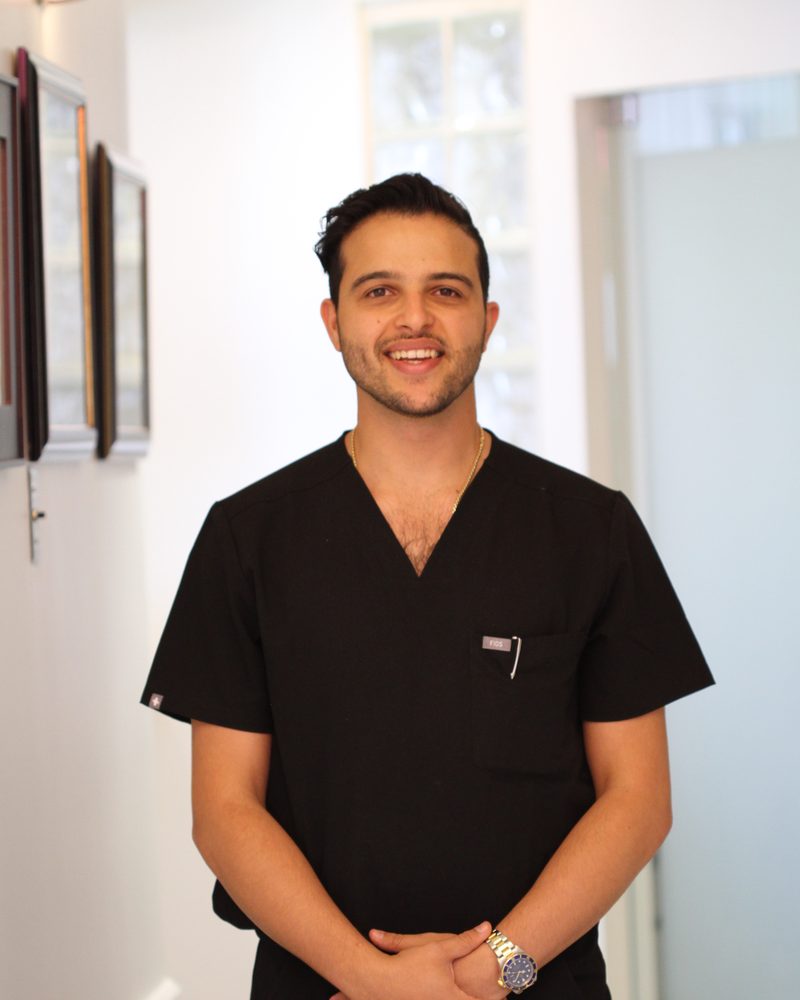
The dentist
About your dentist
Faraz Farahnik, DDS is a general dentist whose practice focuses on cosmetic and restorative dentistry.
- Education
- UCLA, with honors · DDS, USC, 2018
- Practicing
- Practicing dentist since 2018
- Languages
- English · Farsi
Begin
Compare Your Options in Person
Visit us in Encino. Dr. Farahnik examines bone, gums and any denture you wear today, then explains each route. We take all PPO plans. For financing, Cherry comes first and CareCredit second.
Book through (818) 658-9285. Treatment gets confirmed once we examine you.