


Snap On Veneers vs Porcelain Veneers: Removable Cover or Bonded Shells?
The short answer
A snap-on shell is something you wear; a porcelain veneer becomes part of the tooth. That single difference shapes how you eat, clean and look after each one, and how long it lasts.
Snap-on veneers vs porcelain veneers is a choice between a removable cover and a bonded restoration. Snap-on veneers fit over your teeth and come out like a retainer, but users report discomfort and they can trap plaque. Porcelain veneers are thin custom shells bonded to the front of teeth, with long-term clinical research behind them.
Faraz Farahnik, DDSDDS, USC Herman Ostrow School of DentistryPatients travel from across the country and around the world.
Comparison
The Difference Between Snap-on Veneers and Porcelain Veneers
One comes out and one doesn't. A snap-on veneer covers the teeth and comes off; a porcelain veneer bonds to the tooth and stays.
Removable veneers also go by pop-on or snap-on; Cleveland Clinic calls them covers that hide imperfections and come out whenever you like, the way a retainer does. The ADA's glossary defines a laminate veneer as a thin covering of the front surface of a tooth, usually in tooth-colored material, used to restore teeth that are discolored, damaged, misshapen or misaligned.
There are two kinds of snap-on product, and the difference matters. A dentist can have one custom-made from impressions of your teeth. Many others come pre-made, online or in stores, and people glue or clip them on at home without anyone checking the fit. Most of those use resin, plastic or silicone.
Side-by-side Comparison
| Snap-on veneers | Porcelain veneers | |
|---|---|---|
| What it is | A removable cover worn over the teeth | Custom ceramic shells, each fixed to one tooth |
| Change to your teeth | Nothing bonded; teeth stay as they are | Usually some enamel reshaped so the shell sits flush |
| Fixed or removable | You take it in and out | Fixed |
| Visits | None for pre-made kits; a few for custom-made ones | Several: planning, preparation, then bonding |
| Durable? | Not durable, and there isn't a lot of research on them | Reliable, with favorable long-term results |
| Upkeep | Clean the cover and your teeth; take it out to eat | Brush and floss as usual; protect from hard biting |
| Reversibility | Stop wearing it | Not reversible once enamel is reshaped |
| Who it suits | Short-term or occasional wear, after a dental check | Healthy teeth with a lasting cosmetic concern |
Comparison
The Feel of Each One in Daily Life
Porcelain veneers bond to the teeth, so you eat and talk on them like your own teeth. A snap-on cover sits on top of everything, and that changes how your mouth feels.
Eating and speaking
Cleveland Clinic notes that removable veneers can make eating difficult and may affect your speech. Researchers add that it is not recommended to eat while using these appliances because they are not durable. So most people end up taking them out for meals, which is fine for a dinner out and less fine for every day.
Comfort and fit
Most users of pre-made snap-on veneers experienced discomfort and did not recommend them, in one survey. Fit is the likely reason. A cover that ignores where your jaw closes can create bite problems, because pre-made shells aren't designed around your jaw position.
Living with porcelain
Porcelain asks for care rather than removal. You brush and floss normally, keep regular cleanings, and avoid using your front teeth as tools. If you grind at night, ask Dr. Farahnik about a guard that protects the porcelain while you sleep. Our guide to caring for porcelain veneers covers the routine.
Comparison
The Research on Snap-on vs Porcelain Veneers
Porcelain veneers have years of clinical studies behind them; snap-on veneers have very little. That gap is worth weighing on its own.
A 2025 systematic review and meta-analysis concluded that ceramic veneers made from feldspathic porcelain, leucite-reinforced glass ceramic or lithium disilicate are a minimally invasive and reliable treatment with favorable long-term results. The same review noted marginal discoloration and marginal gap formation, possibly because gingival recessions over time exposed the margins, though laminate veneers were rarely replaced for those reasons.
For removable veneers, Cleveland Clinic says plainly that there isn't much research yet, and suggests asking your dentist whether this option is safe for you. Our sources hold only a user questionnaire on pre-made versions beyond that.
Your first step is a conversation.
Comparison
Changes to Your Natural Teeth
A snap-on cover leaves the teeth untouched but can hold plaque against them. Porcelain usually means reshaping a thin layer of enamel, which is a one-way step.
Under a snap-on cover
Wearing pre-made snap-on veneers raises the risk of cavities and plaque buildup, according to the researchers who studied them. A cover that sits over the teeth for hours keeps saliva from rinsing them, so cleaning both the appliance and your teeth before putting it back matters.
Under porcelain
Cleveland Clinic contrasts reversible bonding with porcelain veneers, which are not reversible. How much enamel the dentist reshapes varies. The conservation of sound tooth structure helps preserve tooth vitality and reduce postoperative sensitivity, according to laboratory work. A 2025 review also found no-prep veneers performed well while preserving enamel. Our guide on whether veneers ruin your teeth explains the trade-off in more detail.
Whichever you pick, healthy teeth come first. Per the ADA, putting veneers over teeth with untreated problems can worsen those problems.
Comparison
Good Candidates for Snap-on Veneers
People who want a different look for an occasion or a short stretch, and who will have their teeth checked first.
- You want something you can take out whenever you like.
- You plan to wear it for photos or events, not for meals.
- Your teeth and gums are healthy, and you'll keep both the cover and your teeth clean.
- You'd rather have a custom-made cover checked by a dentist than a kit that ignores your bite.
Comparison
Good Candidates for Porcelain Veneers
People with healthy teeth and gums who want a fixed change to color, shape, chips or small gaps, and who accept a step that can't be undone.
- Teeth are stained, chipped, worn or a little uneven.
- Any decay or gum disease has been treated, because veneers can aggravate it.
- No heavy clenching, grinding or deep overbite, which the ADA lists as reasons veneers may not suit you.
If you'd like a bonded option that often needs little or no enamel removed, compare composite veneers. Resin can come off later, which porcelain can't, though it picks up stain and chips sooner. Our porcelain vs composite veneers page goes through that choice.
Comparison
Combining or Switching
You can move from a removable cover to porcelain later. Moving back isn't possible once the dentist has reshaped enamel, which is why some people start with the option they can stop.
If you're curious what veneers would look like, a removable appliance isn't the only way to find out. A diagnostic mock-up places the planned shape on your own teeth in temporary material before anything changes. In one study, all mock-ups were larger than the wax-up. Treat a mock-up as a preview, not an exact replica.
Comparison
Making the Decision
Think about how long you want the change to last, how you feel about altering enamel, and the evidence behind it.
- Is this for an event, or for every day?
- Would taking a cover out to eat bother you?
- Are you comfortable with a change that can't be reversed?
- Are your teeth and gums healthy enough for either option?
An exam answers the last question, and it is worth having before you order anything to wear over your teeth. The study authors also underscore the importance of consulting dental professionals for safe and effective cosmetic treatments.
Comparison
Insurance and Financing for Each Option
After the exam, Dr. Farahnik writes out the plan for your teeth.
Insurers generally treat veneers as cosmetic, so insurance may not cover them unless your plan deems them medically necessary. The porcelain veneers page covers the treatment itself.
Have a question about your plan? Our insurance and financing questions page covers the common ones.
You'll receive a written treatment plan and fee after your exam.
Insurance: We accept all PPO insurance plans.
Financing: Cherry · CareCredit · Sunbit · In-house financing
Apply with CherryApply with CareCredit
Financing is subject to credit approval.
Questions
Frequently asked questions
Can you eat with snap-on veneers?
It isn't recommended. Removable veneers can make eating difficult, and researchers note that pre-made versions aren't durable enough to chew on, so most people take them out for meals.
Do snap-on veneers damage your teeth?
They aren't bonded, so your enamel isn't reshaped. Wearing them can raise the risk of cavities and plaque buildup. A cover that ignores your bite can also cause problems, so a dental check first is sensible.
Are porcelain veneers reversible?
No. Porcelain veneers usually involve reshaping some enamel, so the teeth will need a covering from then on. Composite resin bonding is the reversible option.
Can I preview porcelain veneers before committing?
Often, yes. A diagnostic mock-up places the planned shape on your own teeth in temporary material. Studies show, though, that it is a preview rather than an exact copy of the final veneers.
Are snap-on veneers the same as composite veneers?
No. Composite veneers are tooth-colored resin bonded to the tooth. Snap-on veneers, by contrast, are removable covers made of resin, plastic or silicone that you take in and out.
Does insurance cover snap-on or porcelain veneers?
Most plans file veneers under cosmetic and pay only when they judge them medically necessary. We accept all PPO insurance plans. The written treatment plan from your exam is what you take to your insurer.
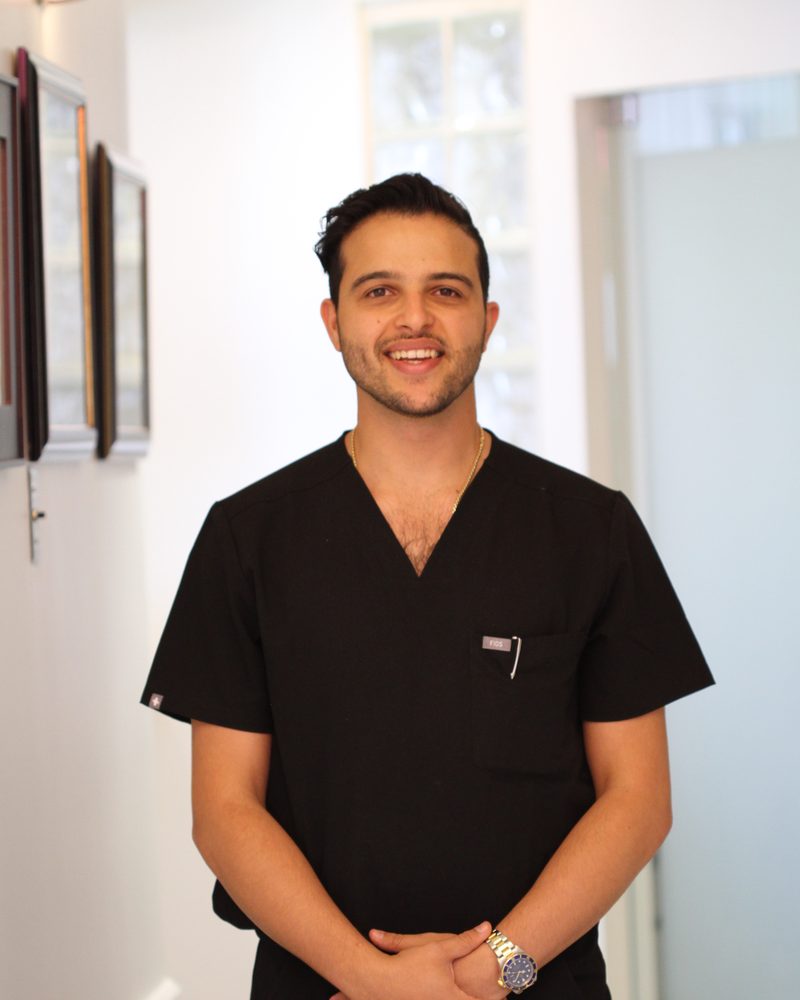
The dentist
About your dentist
Faraz Farahnik, DDS, a general dentist, centers his work on cosmetic and restorative care, porcelain veneers included.
- Education
- UCLA, with honors · DDS, USC, 2018
- Practicing
- Practicing dentist since 2018
- Languages
- English · Farsi
Begin
Start with a phone consultation
Torn between a clip-on cover and porcelain? Talk it over by phone at (818) 658-9285, then an exam of your own teeth settles it.